
The Learning Evidence page accessed via the Main Menu is a read-only repository displaying assignments (evidence) submitted by students during their coursework.
-
Assignment-Based Evidences: Only evidence that was submitted as part of a Program Assessment will display.
-
Self Issued Evidences: Solely submitted by students and sent to the appropriate reviewer, such as course faculty, for review. This functionality is controlled by Institution enablement of the Allow Personal Experiences setting in Learning Journey Settings. Learn more.
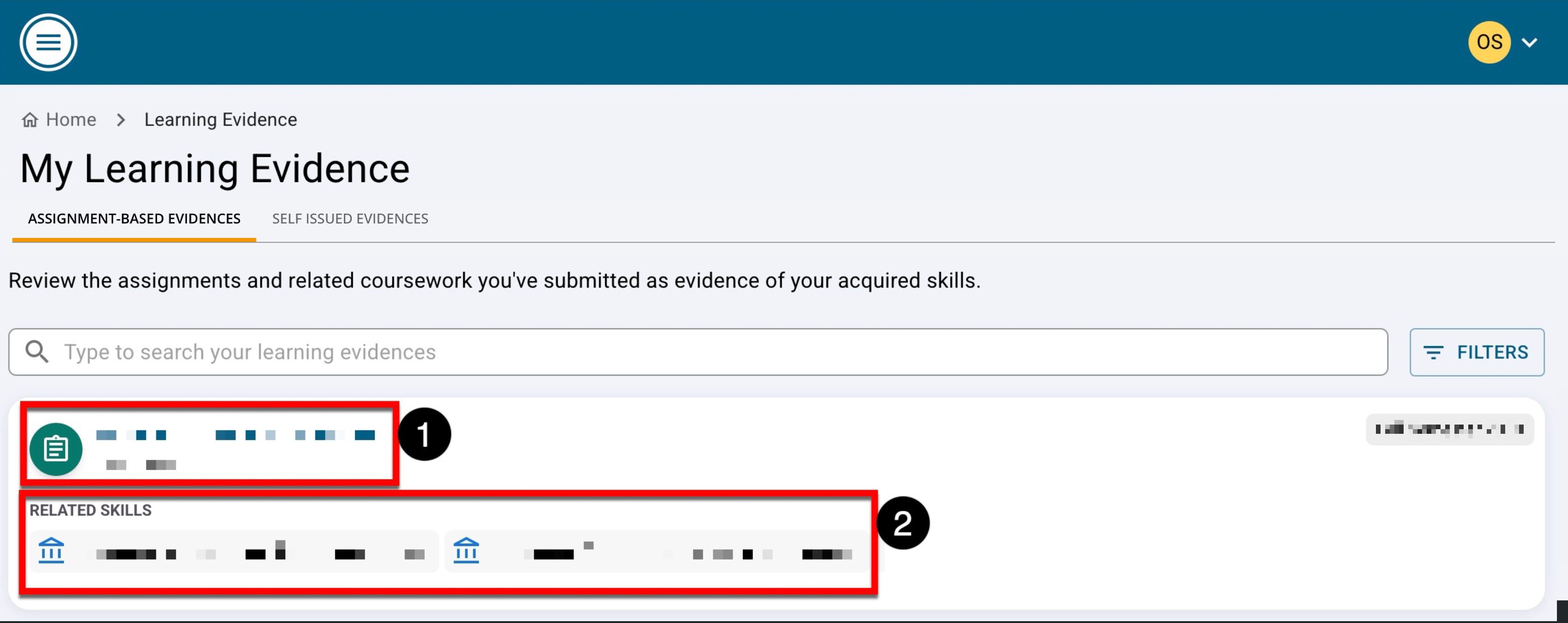
The assignment name and associated course section are displayed (1), as well as competencies that are related to the assignment (2).
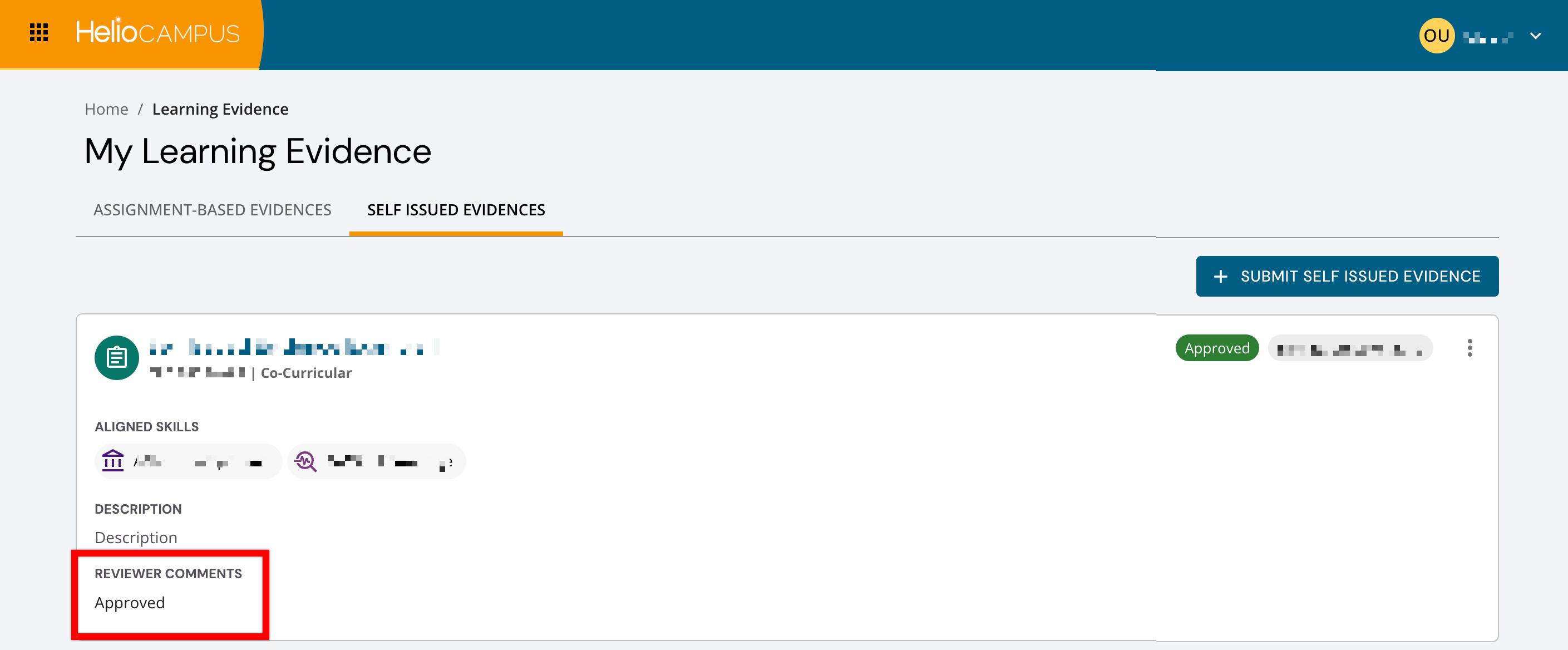
For self-issued evidence, a Reviewer Comments section will display. This section displays feedback from the reviewer after self-issued evidence has been reviewed. If evidence is approved, the reviewer may leave a confirmation comment. If evidence is denied, review this section to understand why it was not approved and what changes may be needed before submitting again.
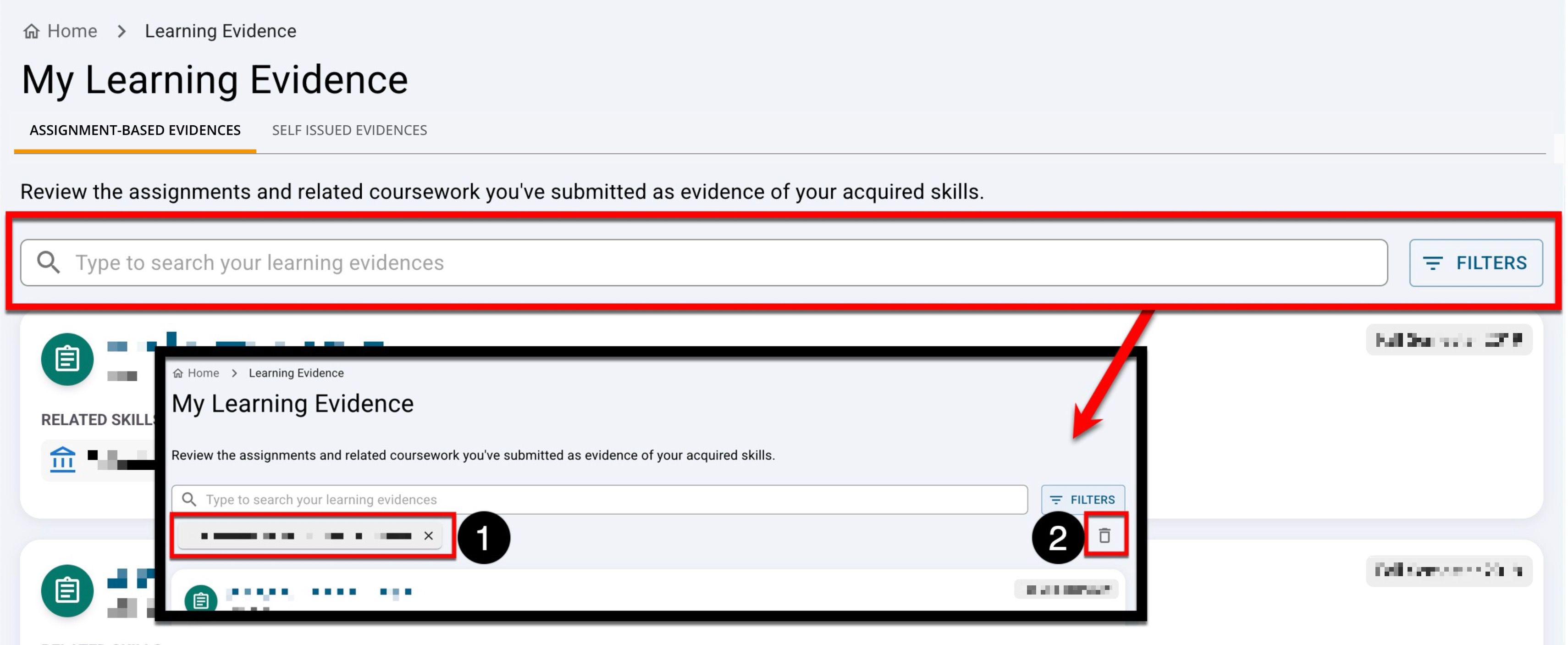
Search functionality is available, and by clicking the Filters option, specific filters can be applied. Once filters have been applied, they will display below the search bar and can be removed individually (1) or in bulk (2).
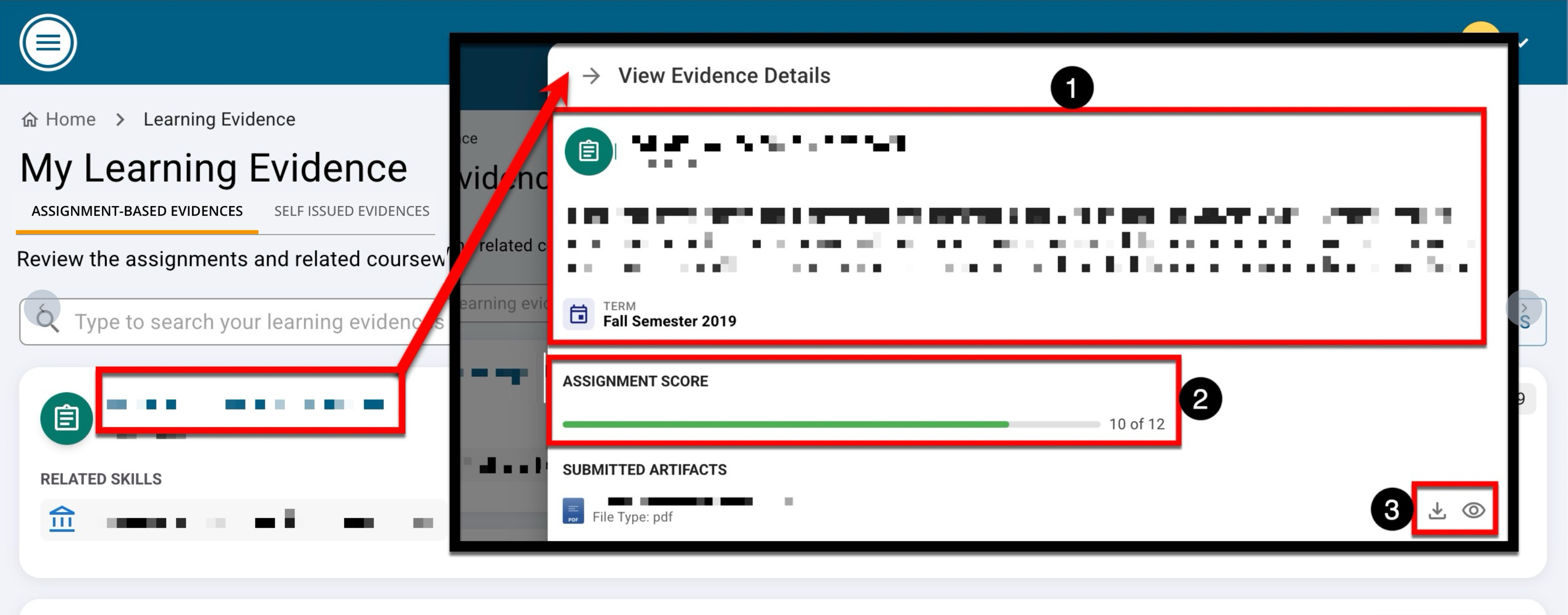
Clicking the name of an evidence will open the Details drawer. This drawer displays the assignment name, associated experience, description, and term (1). The student’s assigned score out of the total possible score is displayed (2), and if evidences/artifacts were included with the assignment, they can be downloaded or previewed (3).
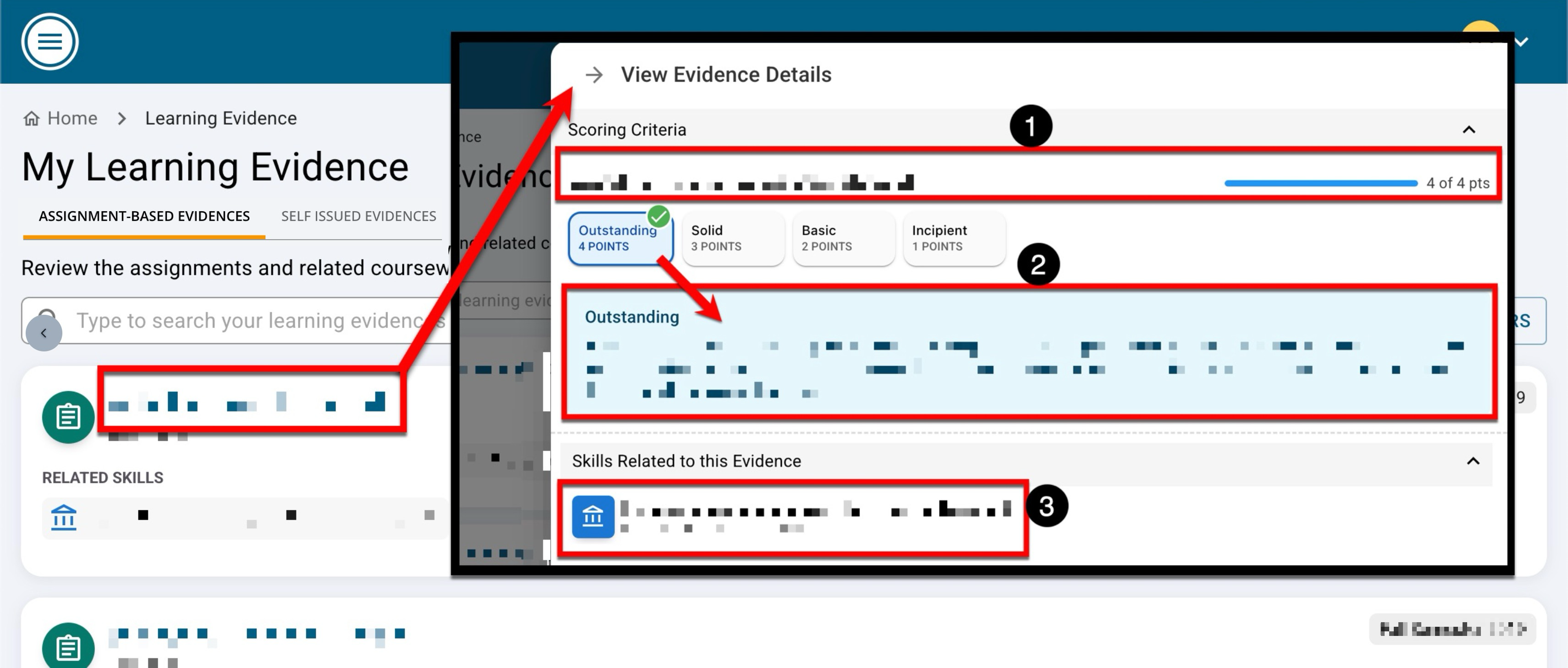
Also in the Details drawer is the scoring criteria (1), which displays the proficiency achieved on the linked outcome as well as a proficiency descriptor (2), and skills related to the assignment. The details drawer supports rubric range values for all supported rubric types, including point rubrics, point rubrics with an NA option, range rubrics, and range rubrics with an NA option, ensuring that students and administrators see an accurate representation of scoring criteria and achievement. The details drawer supports rubric range values for point rubrics and range rubrics, including an NA option.
Adding Self-Issued Evidence
Product Tip
This functionality is controlled by Institution-enablement of the Allow Personal Experiences setting in Learning Journey Settings. Learn more.
Self-issued evidence allows students to add their own evidence of learning to their Learning Journey. This evidence may represent meaningful work, accomplishments, reflections, projects, activities, or other experiences that demonstrate learning and skill development. Unlike assignment-based evidence, which is added through course assignments and assessment processes, self-issued evidence is solely submitted by students. Once submitted, the evidence is sent to the course faculty for review. Once approved, the evidence appears in the Comprehensive Learning Journey and becomes available to include in Stories.
Self-issued evidence helps to:
-
Document learning that may not be captured through a standard assignment submission.
-
Connect completed courses or co-curricular experiences to specific learning outcomes or skills.
-
Build a more complete record of academic, co-curricular, and competency development.
-
Share a stronger, more personalized story of what has been learned and accomplished.
After self-issued evidence is submitted, it will display with a status for progress tracking. Reviewers may also adjust the aligned outcomes before approving the evidence. This helps ensure the evidence is connected to the most appropriate learning outcomes or skills.
-
Pending: Evidence is waiting for review.
-
Approved: Evidence has been reviewed and accepted. Approved evidence can appear in the Comprehensive Learning Journey and be available for use in Stories.
-
Denied: Evidence was not approved; review the reviewer comments for more information.
-
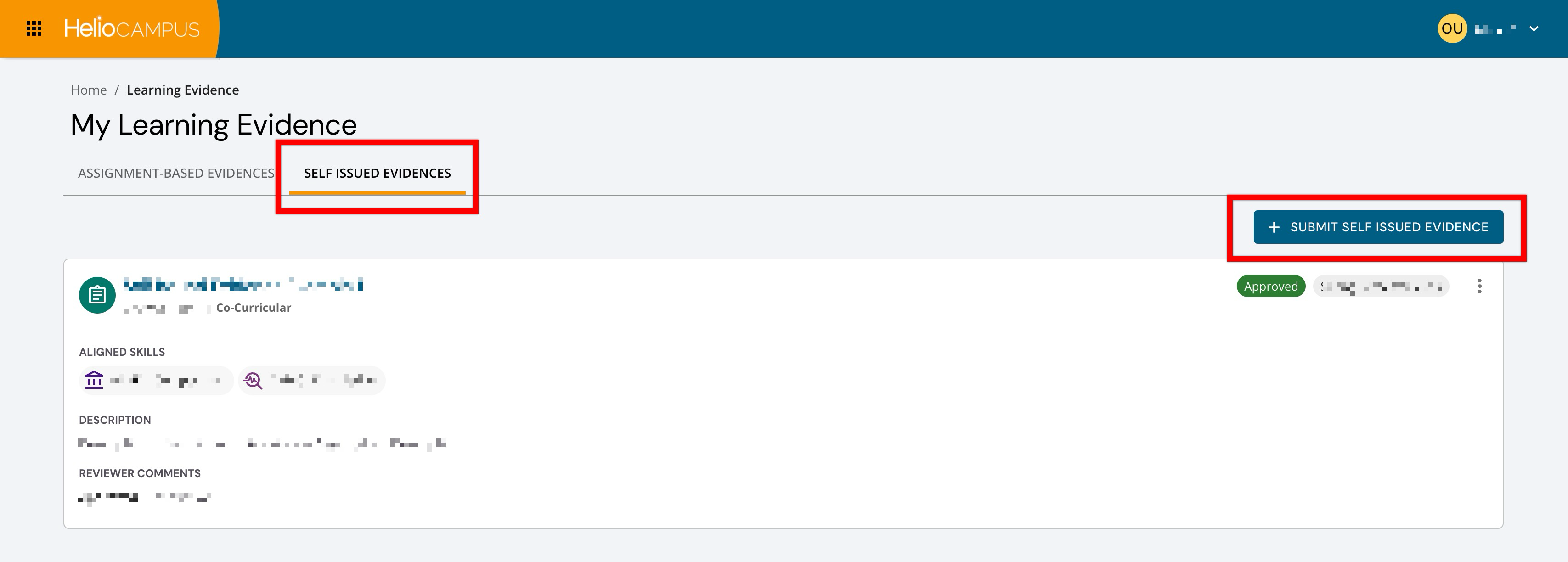
Navigate to the Learning Evidence page and click Submit Self Issued Evidence.
-
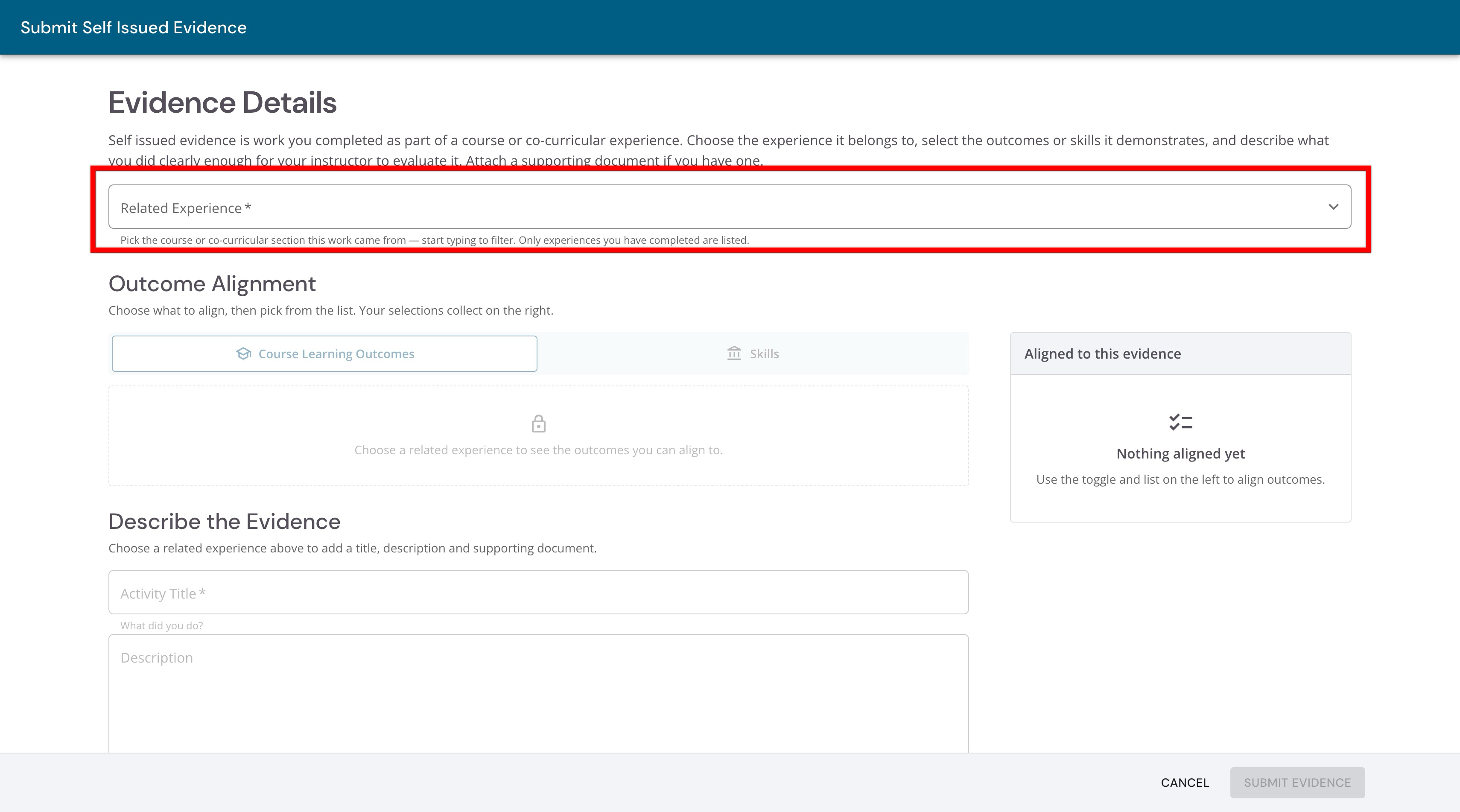
On the Submit Self Issued Evidence screen, select a Related Experience. Choose the course or co-curricular section the work came from; the platform lists only completed experiences. Select a related experience before aligning outcomes or entering the evidence details.
-
-
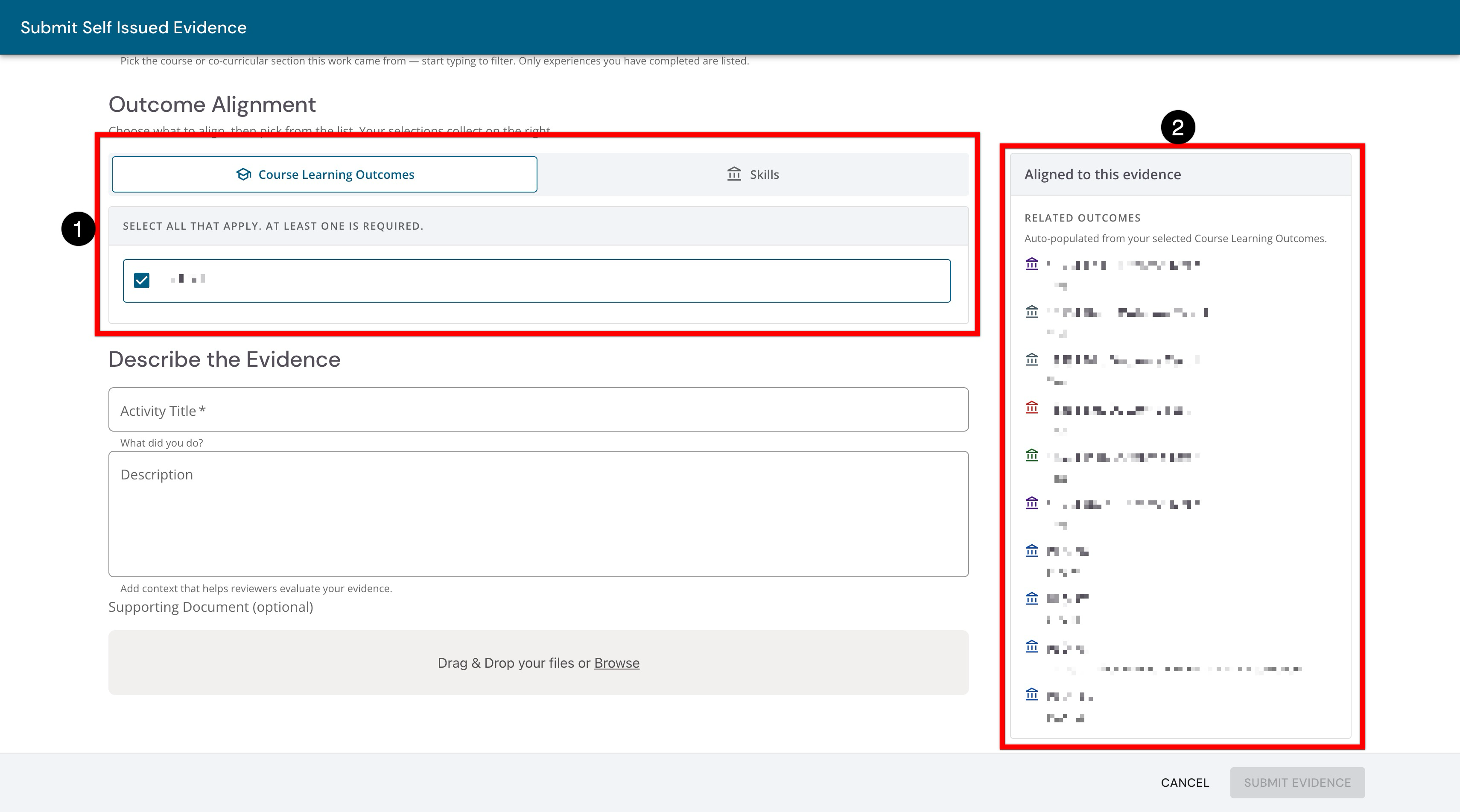
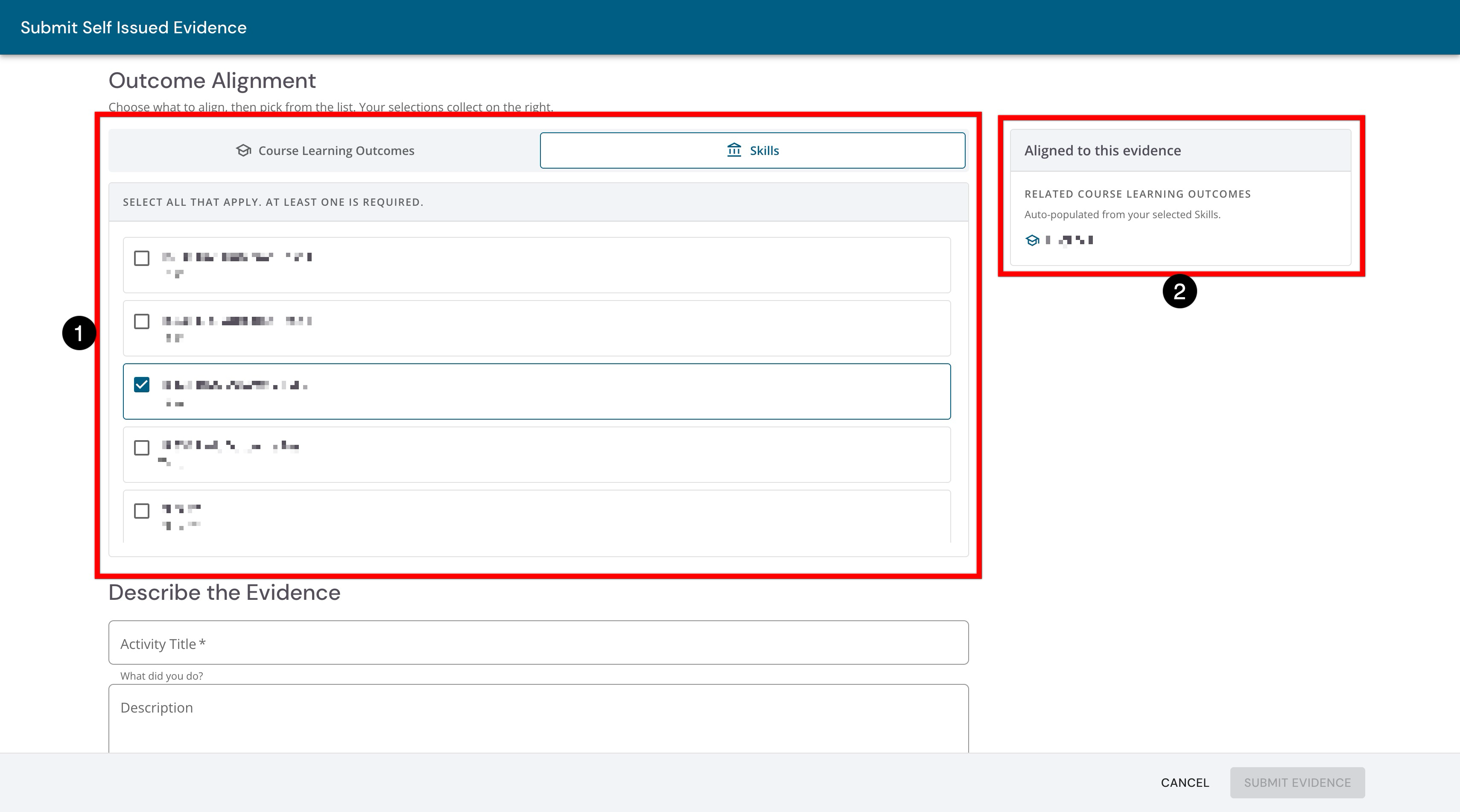
Under Outcome Alignment, use the checkboxes to select all items that apply. At least one selection is required; available items are associated with the selected experience. The Aligned to this evidence panel on the right displays related alignments automatically:
-
When Course Learning Outcomes is selected (1), the panel displays related outcomes populated from the selected outcomes (2).
-
When Skills is selected, the panel displays related course learning outcomes populated from the selected skills.
-
-
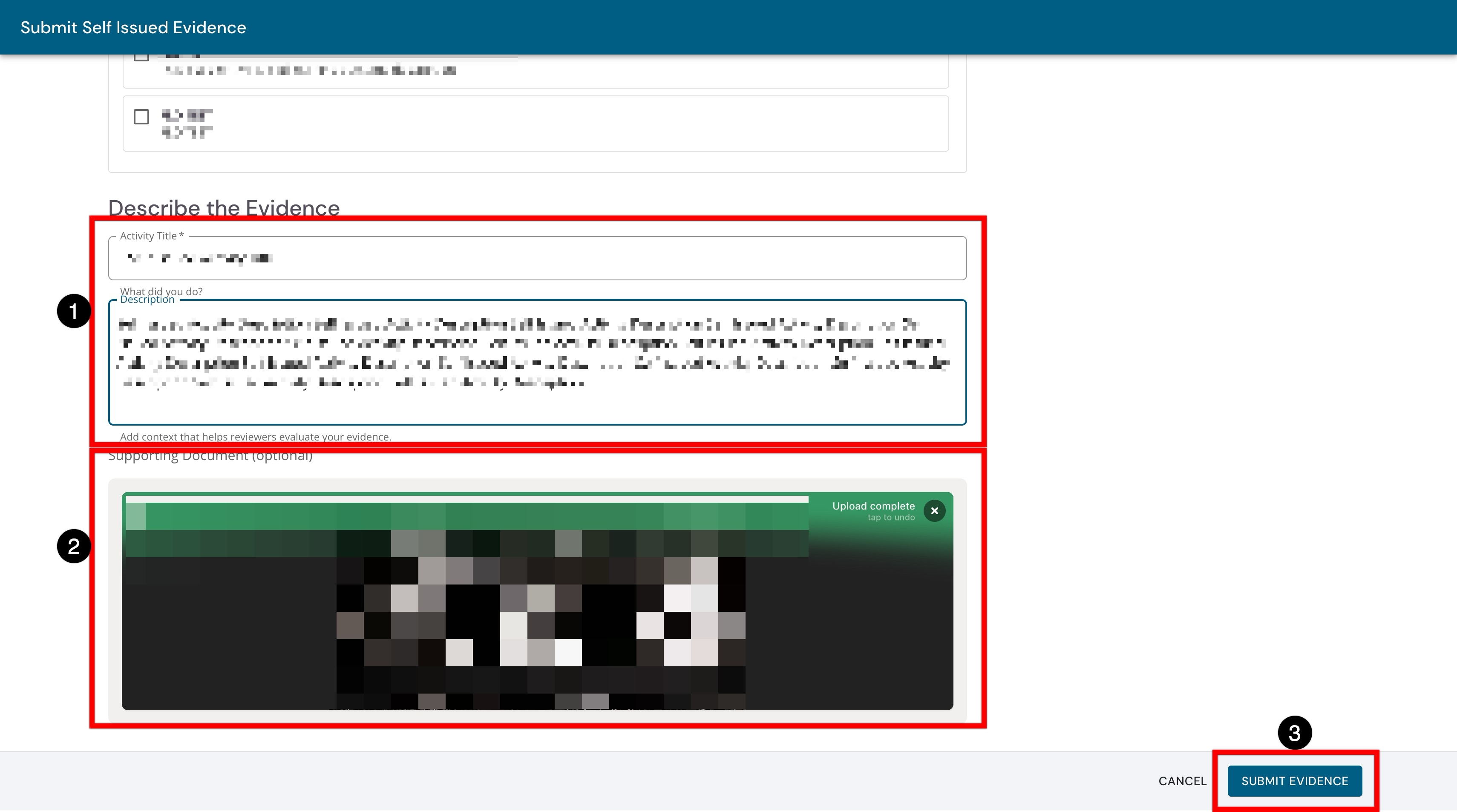
Under Describe the Evidence, enter a title that identifies what was done and a description of the activity to explain how it demonstrates learning (1). Include enough context to help the instructor evaluate the evidence. If applicable, add a Supporting Document by dragging and dropping a file into the upload area or clicking Browse (2). Supporting documents are optional, but they can help demonstrate the work described.
-
Review the selections and evidence details, confirm that any file upload is complete, and click Submit Evidence to send the submission for review.
-
Deleting Self-Issued Evidence
-
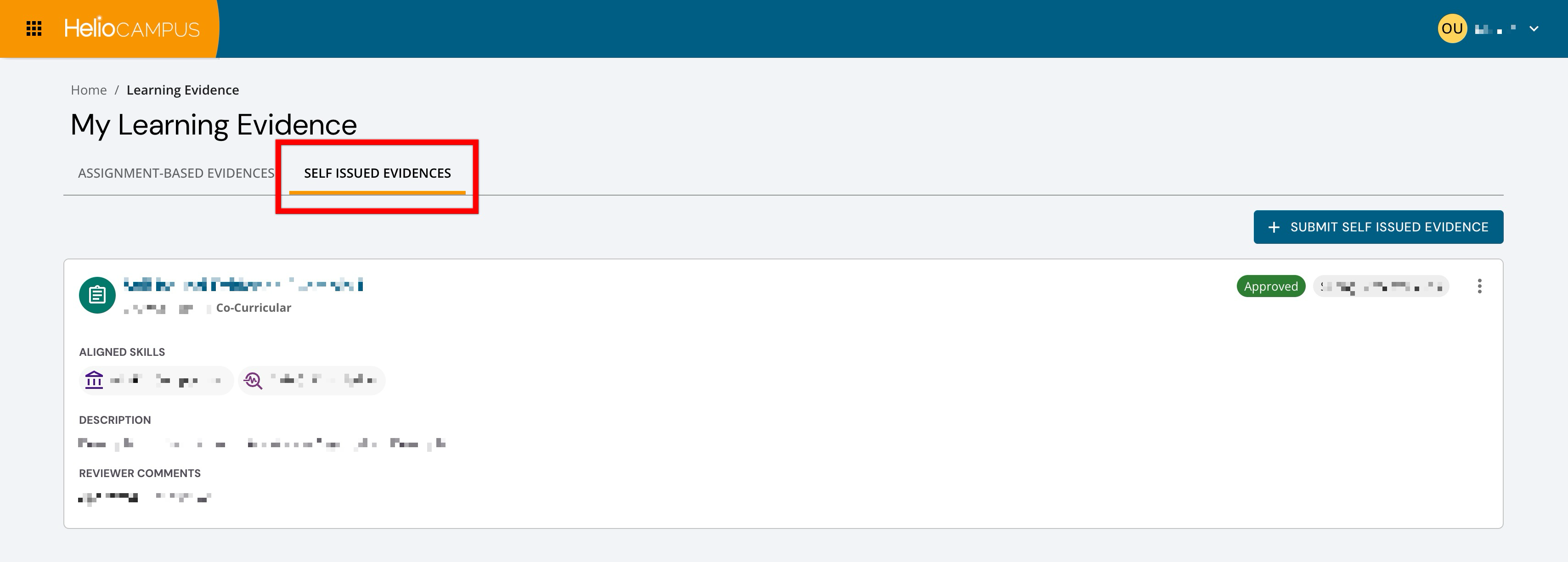
Navigate to the Learning Evidence page and select the Self-Issued Evidences tab.
-
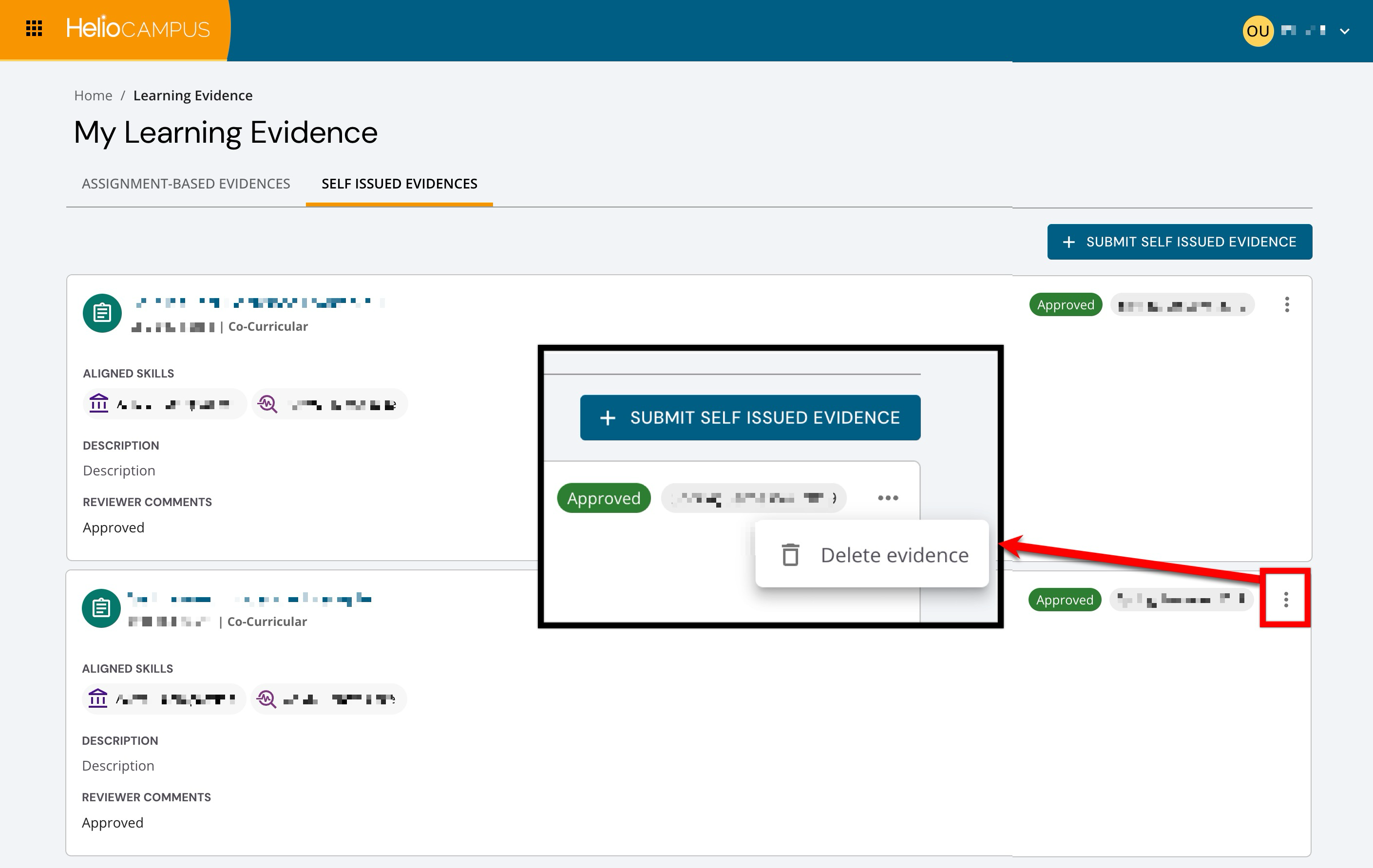
Locate the evidence to delete and, from the expanded actions menu, select Delete evidence.
-
-
Once deleted, evidence is removed from the list of self-issued evidence, the Comprehensive Learner Record, and stories.