Course Assessment Data

image-20240509-154250.png

1

image-20240509-154659.png

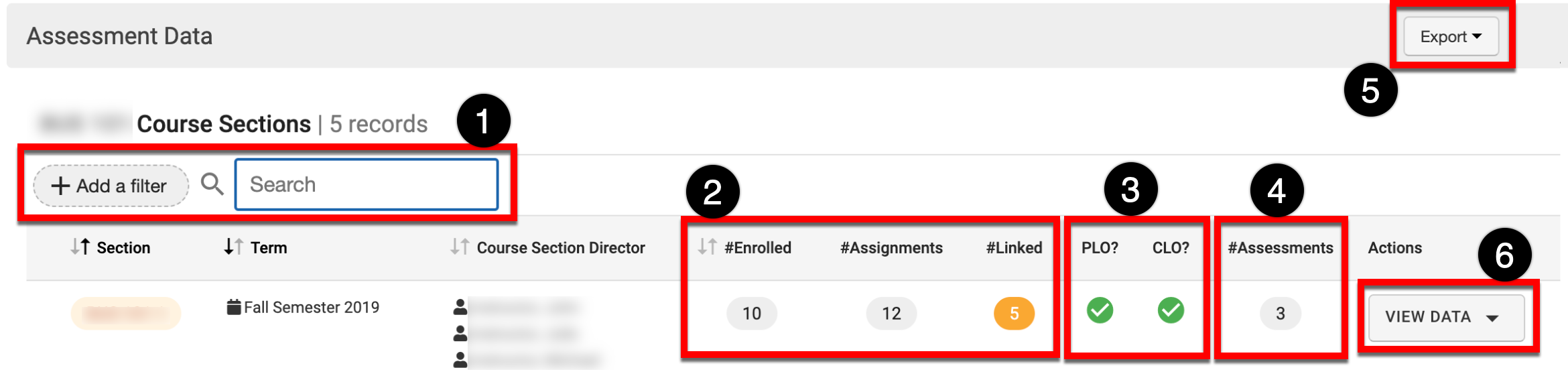
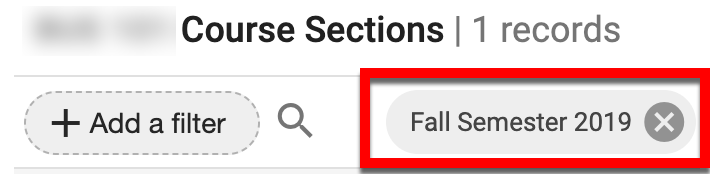
Search and filter functionality. If filters have been applied, they will appear next to the search field and can be removed by clicking the X.

2

  • The #Enrolled column displays the number of enrolled students.

  • The #Assignments column displays the count of assignments either pulled from the Learning Management System (LMS) or created in the platform.

  • The #Linked column displays the count of outcomes linked to at least one assignment.

3

  • When program Learning Outcomes (PLOs) have been mapped to the course/course section, a checkmark appears in the PLO? column.

  • When Course Learning Outcomes (CLOs) have been to the course/course section, a checkmark appears in the CLO? column.

4

The count of assessments for the course section.

5

By expanding the Export menu, assessment data can be exported to PDF and CSV formats or printed.

6

Clicking View Data opens a menu with options to view Individual Data and Aggregate Data for associated assessments.

Individual Data

image-20240513-154605.png

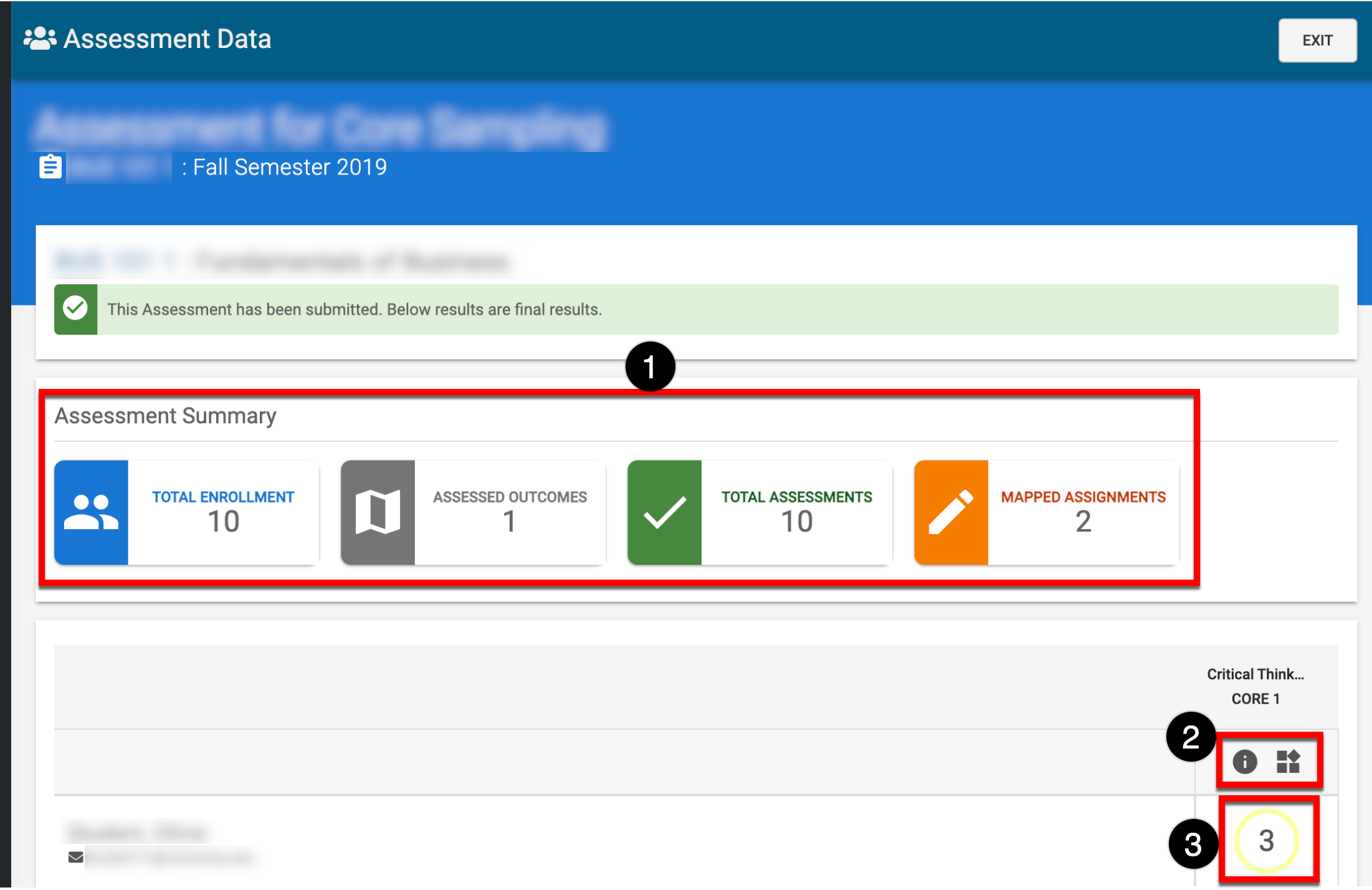
The Assessment Summary (1) displays the number of students enrolled in the course section, the number of outcomes assessed for the course section, the number of students assessed, and the number of assignments mapped to one or more outcomes.

info If a student did not complete an assignment or has no score for an assignment linked to an outcome, they will not be assessed and will not be included in the Total Assessments count.

Clicking the Mapping Information or the Proficiency Scale buttons (2) displays mapping and scale details. Clicking on the proficiency scale level for a student (3) displays the Assessment Details drawer:
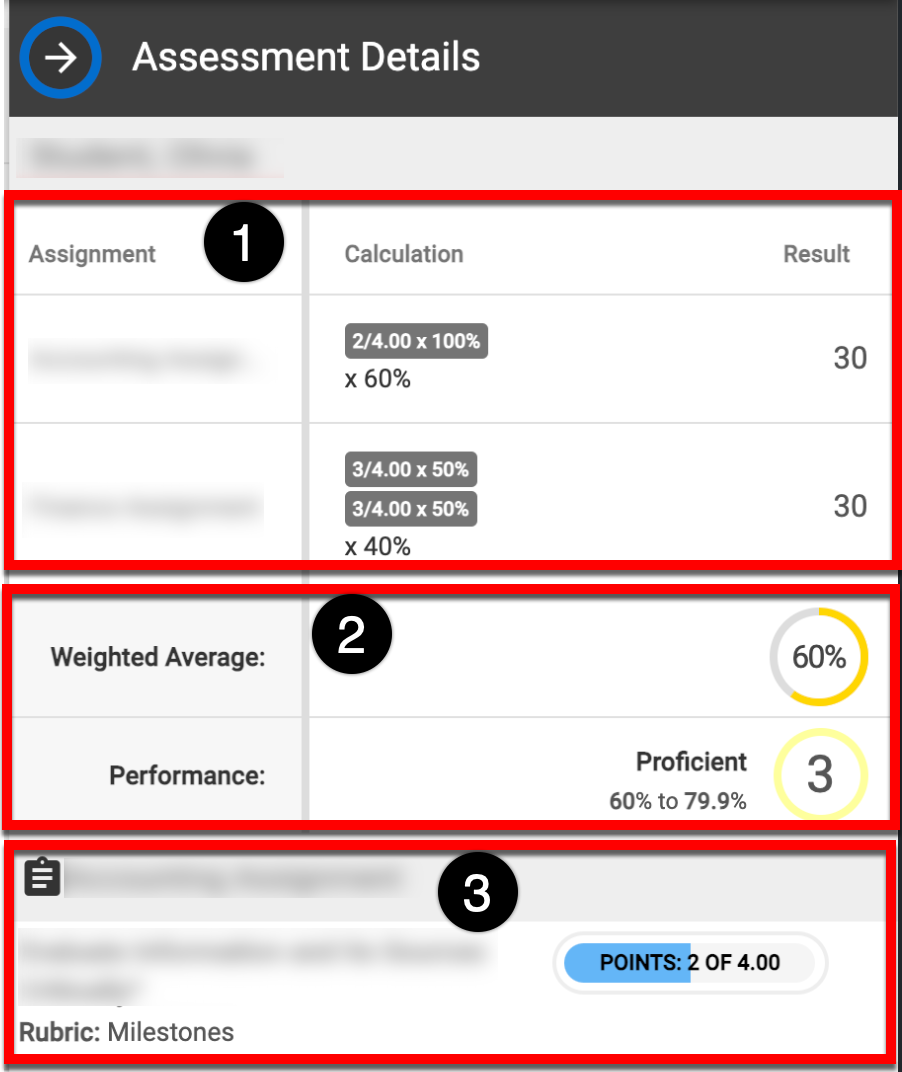
image-20240509-160226.png
  • Assignment (1) displays the name of the assignment linked to the outcome. Calculation (1) shows the number of points divided by the max points multiplied by the assignment weight. Result (1) shows the points for each assignment based on the calculation.

  • The Weighted Average (2) is calculated by the ratio of the result to the total points that can be received. It is defined with four colors according to the completion percentage:
    Red: 0% - 24.99%
    Orange: 25% - 49.99%
    Yellow: 50% - 74.99%
    Green: 75% - 100%
    Performance (2) displays the proficiency scale level correlated to the weighted average.

  • Detailed assignment information includes assignment rubrics, quiz questions, and/or assignment submissions (3).


Assessment Data
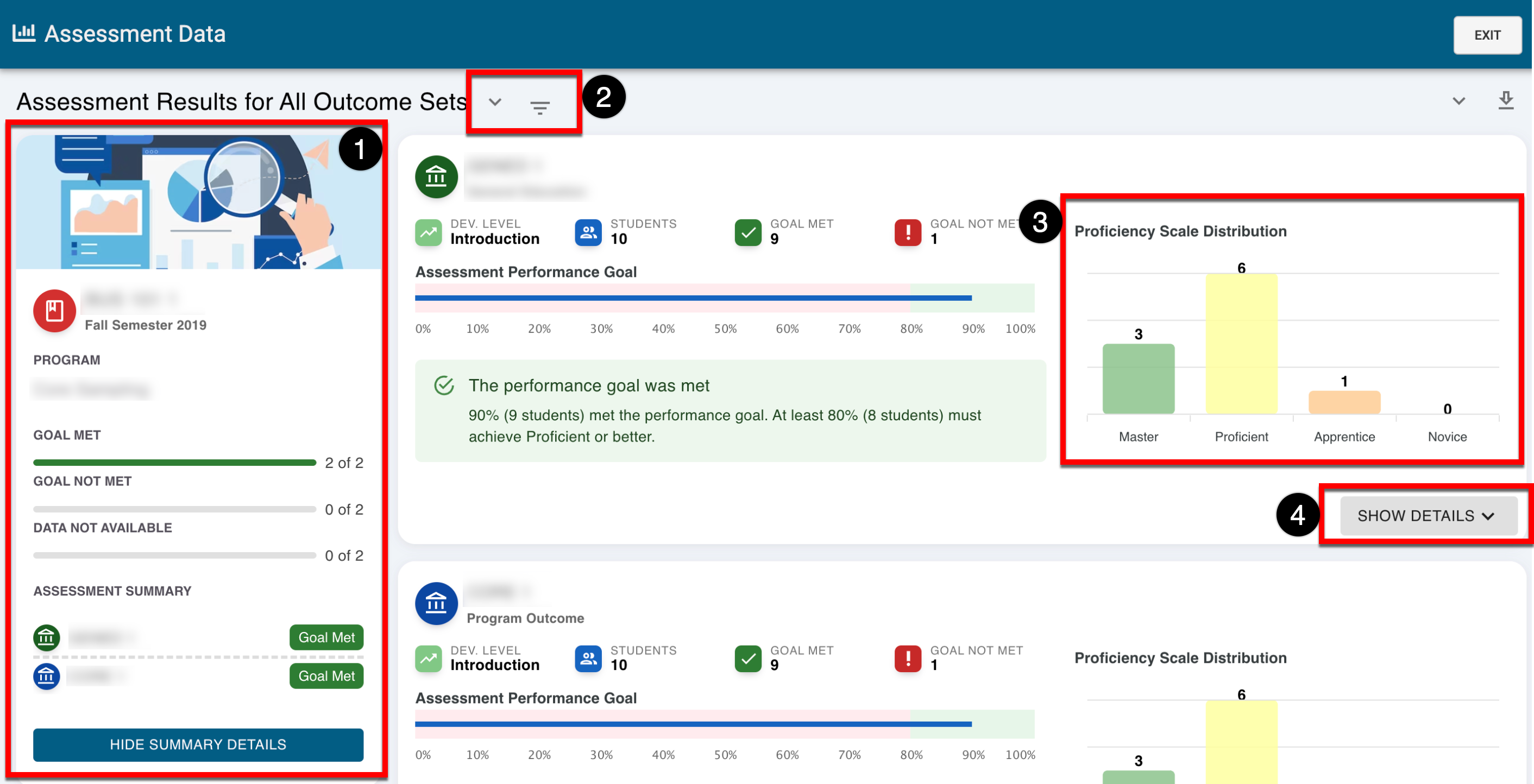
image-20240513-153835.png

The assessment summary panel (1) displays quick information about the outcomes that have been met, not met, or no data available. The view can be changed between outcome sets by selecting the carrot icon (2), and by selecting the Filter Options icon (2), outcome sets can be filtered by degree and goal met/not met. The Proficiency Scale Distribution (3) graphs the total number of students that achieved each level of the proficiency scale. By clicking Show Details (4), detailed information can be reviewed regarding what was assessed and mapping information, assignments, rubric criteria, and quiz questions linked to the outcome; additional detail, including rubric information, can be shown by expanding each assignment.
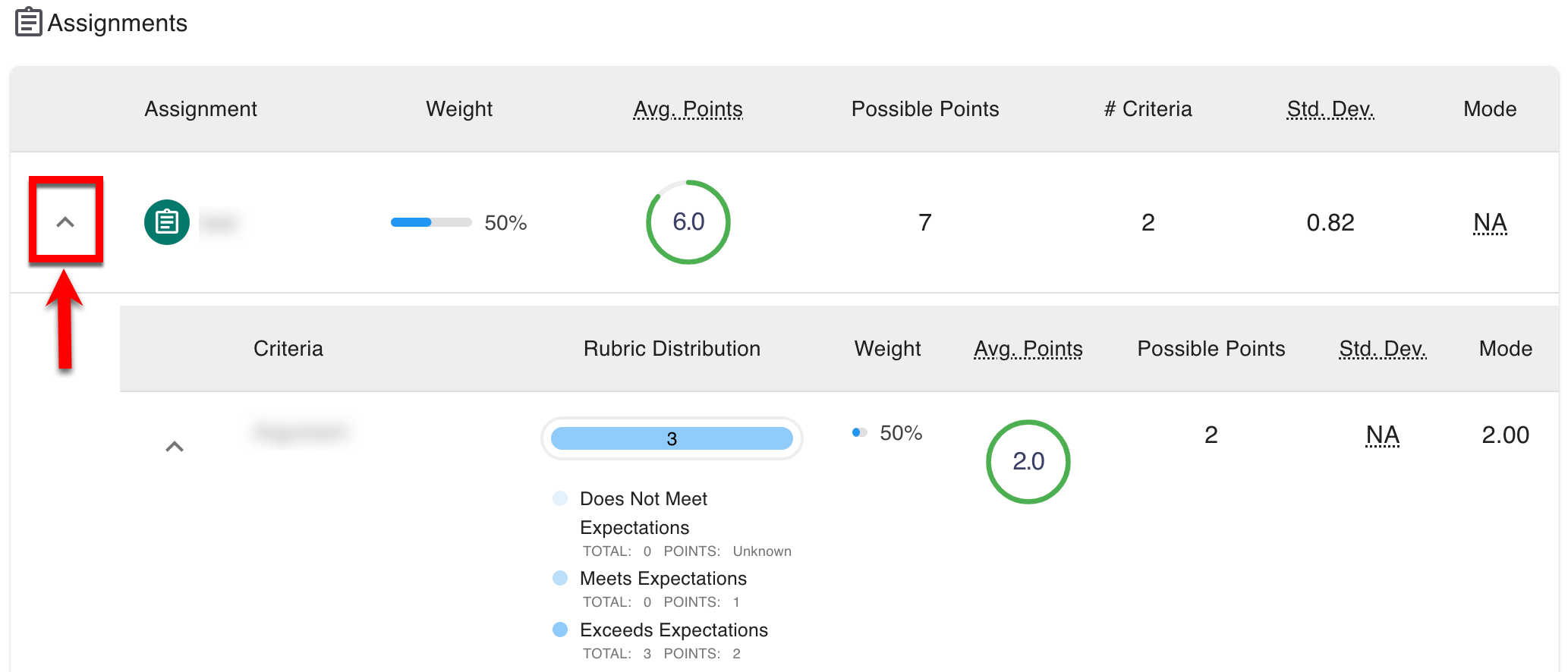
image-20240517-191419.png

Frequently Asked Questions

Why isn’t my assessment data showing up in the HelioCampus platform?

In most cases, assessment data is missing because it has not yet been imported or integrated from the source system. Check that:

  • The data source is configured and active

  • The most recent data load has completed successfully

Check with the Institution’s internal HelioCampus or data governance contact to review configuration and load status, and, if needed, escalate to HelioCampus support with detailed examples.

Click to expand...
  • Confirm the data exists and is correct in the source system.

  • Verify that the correct term, program, and filters are being looked at

  • Check whether the most recent scheduled data load has run.

How long does it take for new assessment data to appear after it’s entered in the source system?

This depends on the Institution’s integration schedule. New assessment data may not be visible in the platform until the next scheduled import completes.

Could assessment data be filtered out due to configuration settings?

Yes. Data can be excluded based on configuration choices such as:

  • Term or date ranges

  • Specific assessment types or categories

  • Program, level, or campus filters

What if only some assessments are missing but others appear correctly?

Partial gaps usually indicate:

  • Certain assessments or instruments were not mapped during setup

  • New assessments were added in the source system after the initial configuration

  • There is an issue with a specific file or data feed related to those assessments

Can permissions or roles prevent a user from seeing certain assessment data?

Yes. If a user role does not grant access to particular programs, departments, or student groups, related assessment data may not be visible even though it exists in the platform.

Could data quality issues in the source system cause assessments to be missing?

Yes. Common data quality issues include:

  • Missing or invalid identifiers (e.g., student IDs, course IDs)

  • Mismatched term codes or dates

  • Incomplete records that fail validation during the load

What happens to assessment data added after the assessment end date?

Any data added after the end date/completion of an assessment will not be reflected in the results. Assessment results are considered final once an assessment is completed. To include new data collected after the end date, assessments can be reopened via the Assessment Homepage.