Administrative Units are administrative (non-academic) components of the Organizational Hierarchy that are manually created and maintained in the platform. Administrative Units are often used to represent non-academic areas (for example, student affairs, IT, institutional effectiveness) and can be thought of similarly to how Departments function for academic structures, but on the administrative side. Units are accessed by navigating to Main Menu > Organizational Hierarchy > Administrative Units. Learn more about the Organizational Hierarchy.
Product Tip
If an Institution's organizational structure changes, please contact Support to facilitate implementation. Changes to the Organizational Hierarchy should not be sent to HelioCampus via data files.
Downstream Impacts
Administrative Units can have broad downstream effects because they are part of the Organizational Hierarchy, which influences how data and configuration are organized and surfaced across the platform. Common downstream impacts to call out in a client-facing KB article include:
-
Permissions and Visibility: Access can be granted and scoped based on hierarchy associations, which can affect what users can see and manage within the platform.
-
Filtering and Targeting: Administrative Units can serve as meaningful “containers” to narrow workflows or processes to a subset of the Institution (for example, filtering to specific administrative organizations rather than all organizations).
-
Survey Scheduling Include groups: When building include and exclude groups for survey schedules, it is considered a best practice to filter at the College or Department level (which also includes Administrative Divisions and Administrative Units in the same selectors), rather than filtering down to subject and course, so schedules keep working as new items are introduced. Learn more.
-
Reporting and Continuity: Changes to Administrative Units, or moving units under different parent structures, can affect how users interpret trends over time (for example, in reports run “by unit”). This is especially important if Administrative Units are used as anchors for workflows like data collection or reporting definitions.
Considerations
-
Manual Maintenance: Administrative Units are maintained in the platform rather than imported from SIS-driven data imports.
-
Deletion Constraints: Administrative Units may not be deleted if they are tied to other objects (e.g., dependent entities or relationships).
-
Parent Relationship: Selecting an Administrative Division for a unit is optional, but it affects how administrative organizations are grouped and navigated.
Best Practices
-
Decide who owns the Administrative Unit structure and who is responsible for ongoing maintenance, naming standards, and periodic cleanup.
-
Establish naming conventions that match institutional language. Keep codes stable and unique as they are often treated as identifiers and are harder to correct later if reused incorrectly.
-
Do not create Administrative Units that duplicate academic units or reuse codes that may later be introduced through file-based processes for academic objects. This can create confusion and cleanup work later.
-
When building survey schedule participant groups, filter by Colleges or Departments (which include Administrative Divisions or Administrative Units) to reduce manual maintenance over time.
Administrative Unit Manager
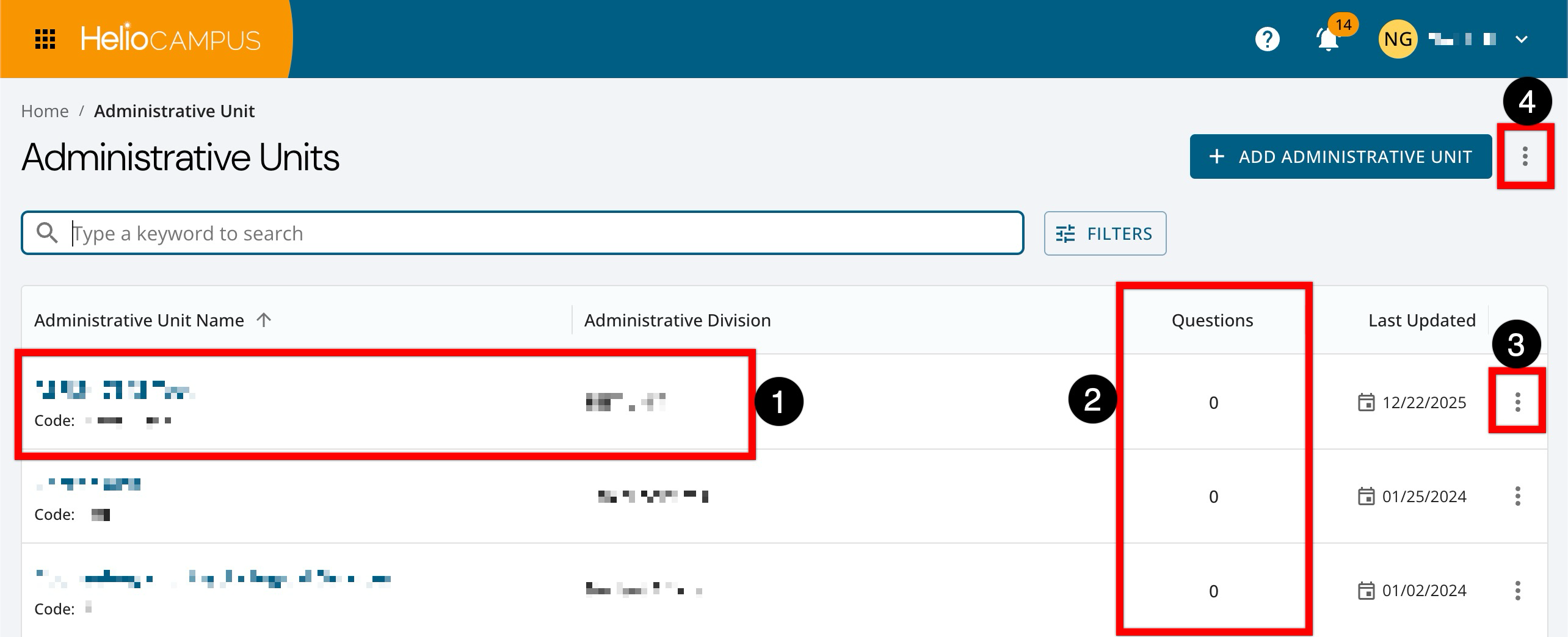
The manager displays a record's name and code, along with the associated owning division; clicking the name (1) displays the homepage. The Questions column (2) provides a quick count of division-specific survey questions. By expanding the Actions menu (3), additional information can be viewed without navigating to the homepage by clicking View Details. Export functionality is available by expanding the More Options menu (4) to export the manager to CSV format.
Administrative Unit Homepage
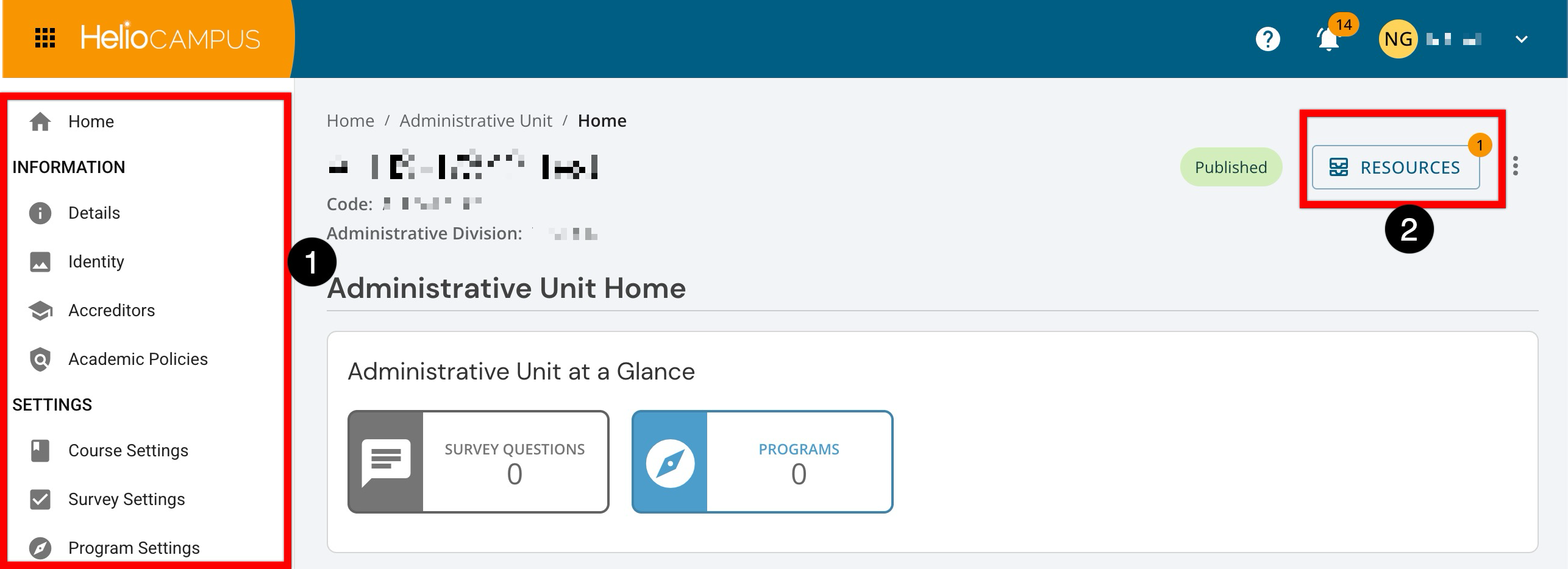
The homepage is the landing page for hierarchy-level-specific administration. In addition to serving as a central "at-a-glance" page, it surfaces summary metrics and visualizations that help confirm the structure and activity at a given hierarchy level. This page is the access point for level-specific configurations and settings that support ongoing operations.
The left-hand menu is the hierarchy-level navigation menu (1), organized into sections of configuration points and settings. The Information section is used to review and maintain core record information and level-specific setups. Below the Information section, various settings menus provide access to level-specific configurations that define defaults and behavior that apply broadly across the hierarchy level. At the top right of the homepage, there is a Resources button (2) that provides a centralized place to access supporting tools and links related to the hierarchy level.
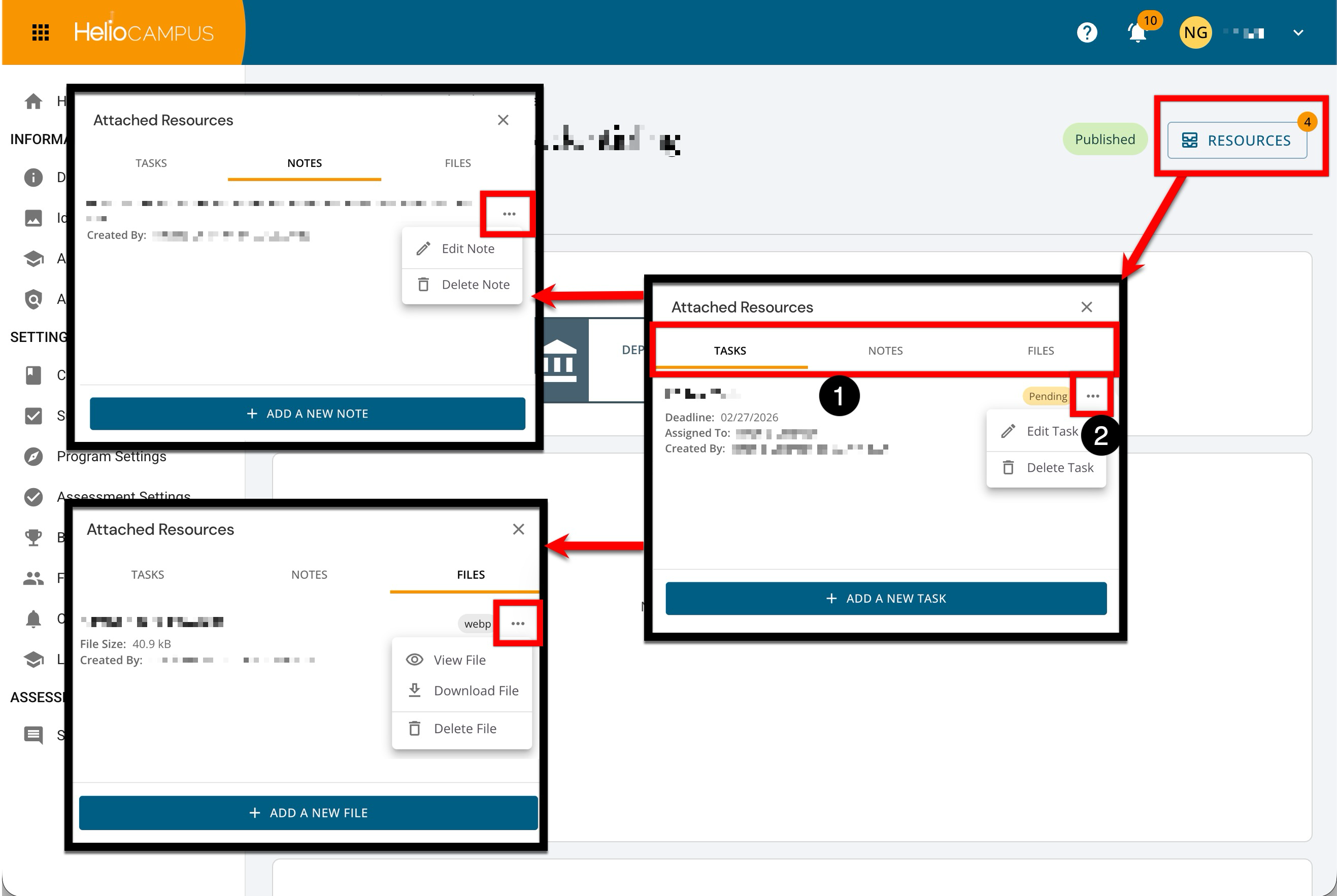
By clicking the Resources button, all level-specific attachments can be accessed in a centralized drawer with organized tabs for tasks, notes, and files (1) with options to view, edit, or delete, as applicable, by resource type (2). New resources can be added quickly through the action buttons at the bottom of each tab.
-
Tasks: Displays tasks assigned to the selected hierarchy level, with creation and assignment details, due dates, status indicators to track progress, and options to edit or delete tasks.
-
Notes: Provides quick access to all associated notes with timestamps and creation details, with options to edit or delete notes.
-
Files: Displays all attached documents and media, with options to view, download, or delete them.