These settings define an Institution’s default benchmark for what “success” looks like in rubric-based program assessment. These settings define a default goal based on the program’s Proficiency Scale configuration; this goal is the target that Students will be expected to achieve for program success. This setting combines two pieces:
-
A target percentage
-
A minimum proficiency level
Together, they establish a shared expectation for how many students should meet or exceed a chosen level (for example, “80% of students achieve at least Proficient”). When set consistently across the hierarchy, performance goals make it easier to interpret results, compare programs, and focus improvement conversations on whether outcomes are being met, not just whether data was collected. Because performance goals are tightly connected to how results are summarized and discussed, Institutions with centralized governance often manage and lock this setting at the Institution level to prevent conflicting definitions of success across Colleges and Departments.
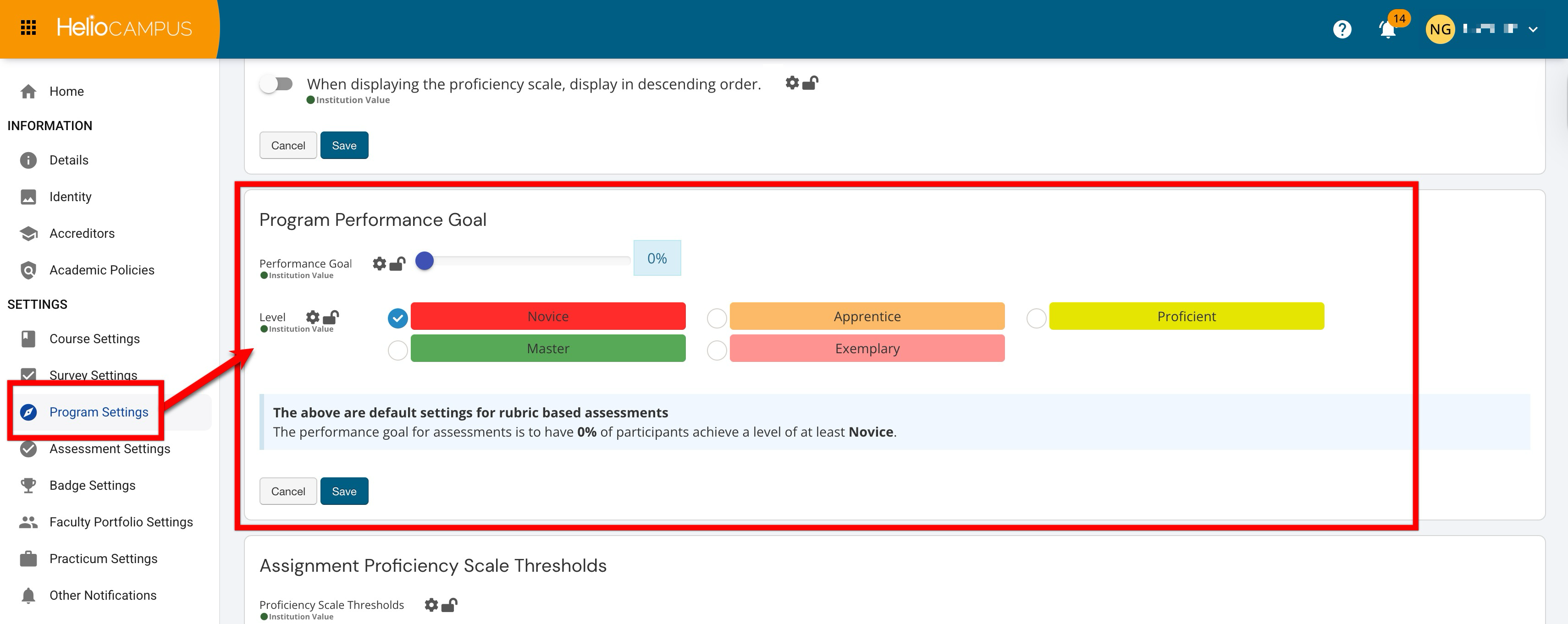
Settings can be locked at a higher level to prevent configuration at lower levels and apply defaults and governance at the appropriate hierarchy level. For example, if the goal is locked at the College level, all Departments under the College inherit the locked configuration and cannot change it. If the Institution later locks a different configuration, the Institution lock overrides the College lock, and the College and all associated Departments inherit the new locked Institution configuration. Learn more.
Downstream Impacts
-
How Success is Measured and Communicated: Results can be framed against a clear benchmark, helping stakeholders quickly understand whether a program is meeting expectations.
-
Reporting Interpretation: Performance goal benchmarks provide context for reports by clarifying what threshold is being used when reviewing proficiency results.
-
Continuous Improvement Planning: Clear goals help teams prioritize follow-up work by identifying where performance falls below the expected benchmark.
-
Change Management: In a centralized governance model, these settings are often managed and locked at the Institution level to prevent programs or downstream units from using different structural levels. This reduces confusion in cross-program reporting and prevents conflicting definitions of success across Colleges and Departments.
Considerations
-
Define “Success” in Plain Language: Align on what the goal represents and how it will be used in review conversations (for example, minimum acceptable performance vs. aspirational target).
-
Align the Goal to the Proficiency Scale: Confirm the selected level labels reflect institutional expectations and are understood consistently across units.
-
Consistency: A standardized goal supports comparable analysis and reduces “moving target” interpretations across Colleges and Departments.
-
Standardize and Lock: If governance is centralized, lock both the percentage and level at the Institution so downstream units inherit the same benchmark and cannot redefine success locally.
-
Plan for Governance and Communication: Treat updates to the goal as a change-management event, especially if results are used for accreditation, strategic planning, or executive reporting.
Performance Goal
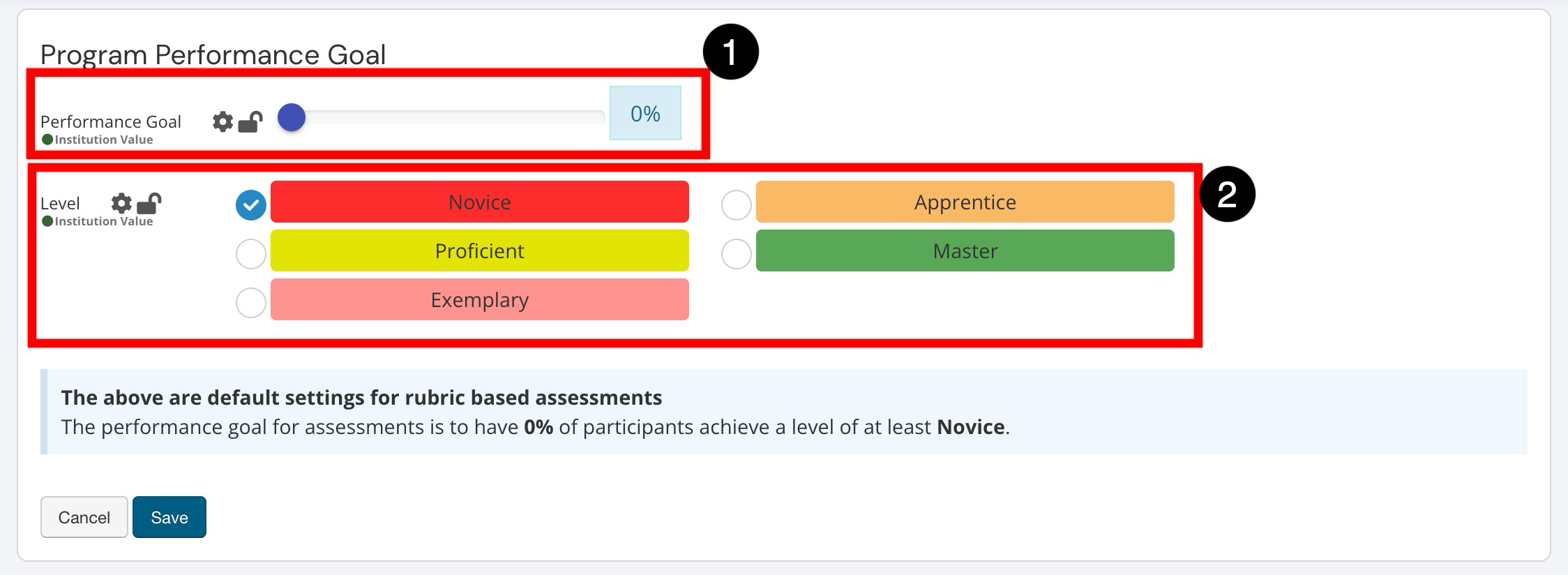
Use the Performance Goal slider (1) to set the percentage of students expected to meet or exceed the selected level, then choose the level (2) that represents the minimum acceptable proficiency. Once saved, this benchmark provides a consistent context for interpreting program results across the platform and supports clearer, more comparable reporting across programs and organizational units.